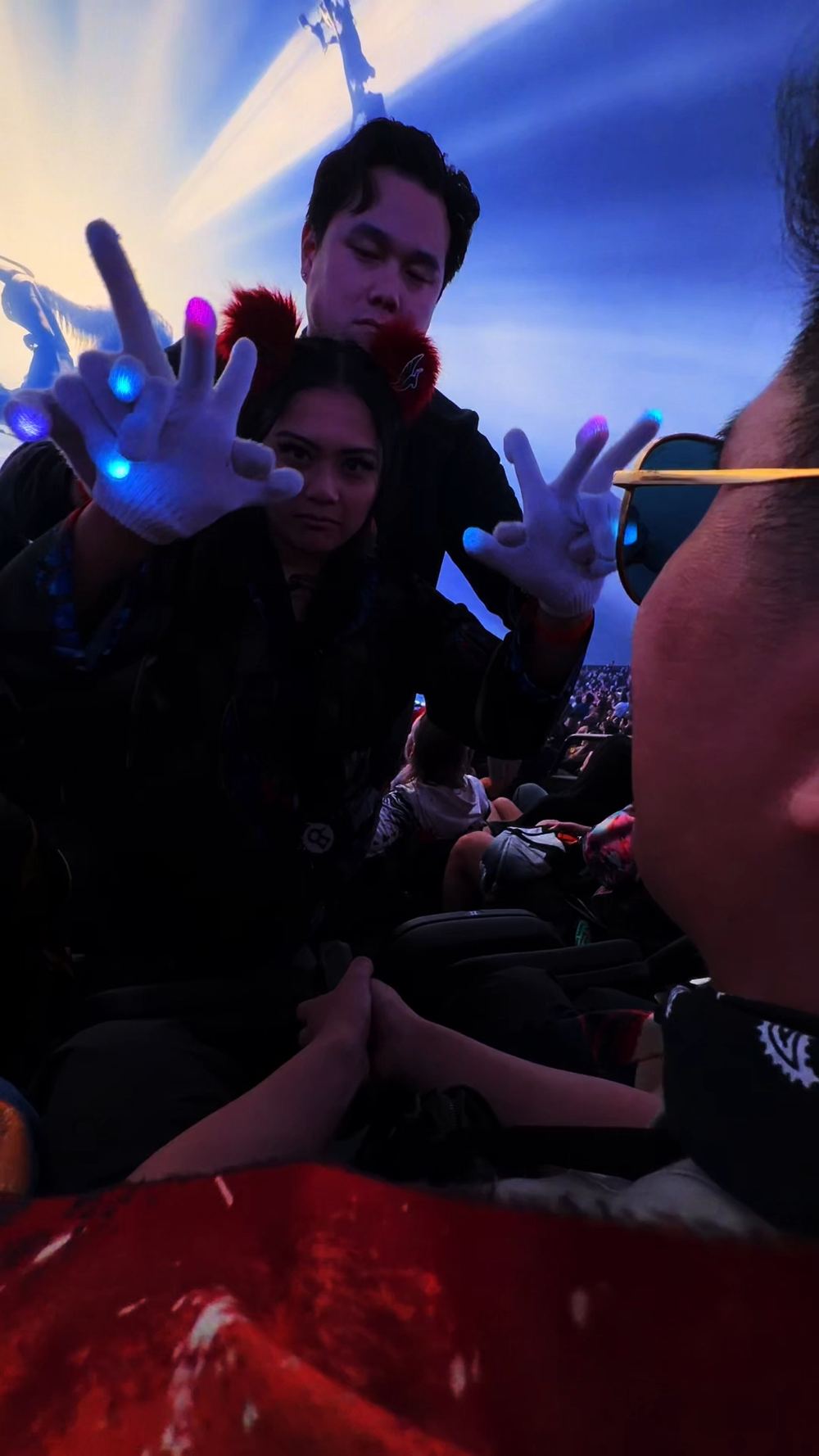
A double lightshow (also called a double team or tag team show) is two glovers performing together as a single act, instead of solo. It's not just two lightshows happening side by side. The whole point is that the two performers move as one, trading movements, mirroring each other, and building something neither could pull off alone.

With 20 points of light instead of 10, a solid double team can create patterns and illusions a solo glover just can't.
The foundation is synchronization: two people moving like they share one set of instincts. That takes real practice and an honest read on your partner's style, not just matching tempo.
From there, the details that separate a good double team from a great one:
Working with a partner tends to surface ideas you wouldn't land on solo. You push each other, and combinations show up that neither of you would've found alone. There's also a straightforward payoff for the audience: two synchronized glovers reading a room together tends to land harder than either one would on their own.
There's a community side too. Double teaming means practicing with people, watching how they move, and trading feedback, which is a different kind of growth than solo reps.
Getting two people in sync takes real hours. There's no shortcut around it. You'll also need to blend styles, since every glover moves differently, and making two styles read as one without flattening either one is the actual craft.
Working that close to another person raises the stakes on spatial awareness (nobody wants a mid-show collision), and energy has to stay level throughout: if one glover flags, the whole performance feels it.
Double lightshows aren't really a separate skill. They're gloving with another brain in the loop. Once you and a partner find your rhythm, it opens up combinations you'd never land on solo.