How to Start Gloving: Beginner's Guide | Glow LEDs
Where do I start?
Level: Beginner
In-Depth Tutorial
Theory
Articles
New to gloving? Start with a beginner microlight kit, practice the digit roll as your first move, and build toward your first full light-show combo. This guide walks you through every step from gear selection to performing your first show.
Where do I start? A beginner's guide to gloving
So you've seen an amazing lightshow and now you want to try it yourself. Welcome to the community.
Getting started can feel like a lot at once, gear, moves, styles, technique. Take it one step at a time and you'll be putting on real lightshows sooner than you think. Every glover you admire started exactly where you are now.
1. Learn the basics
Before you dive in, read to get familiar with the terminology you'll see everywhere else in this guide.
Frequently Asked Questions
Where do I start with gloving?
Start by picking up a beginner microlight kit, then practice the digit roll, a fundamental move that forms the foundation of most light shows. Once you have that down, work on the wave and a few simple combos.
What gear do I need to begin gloving?
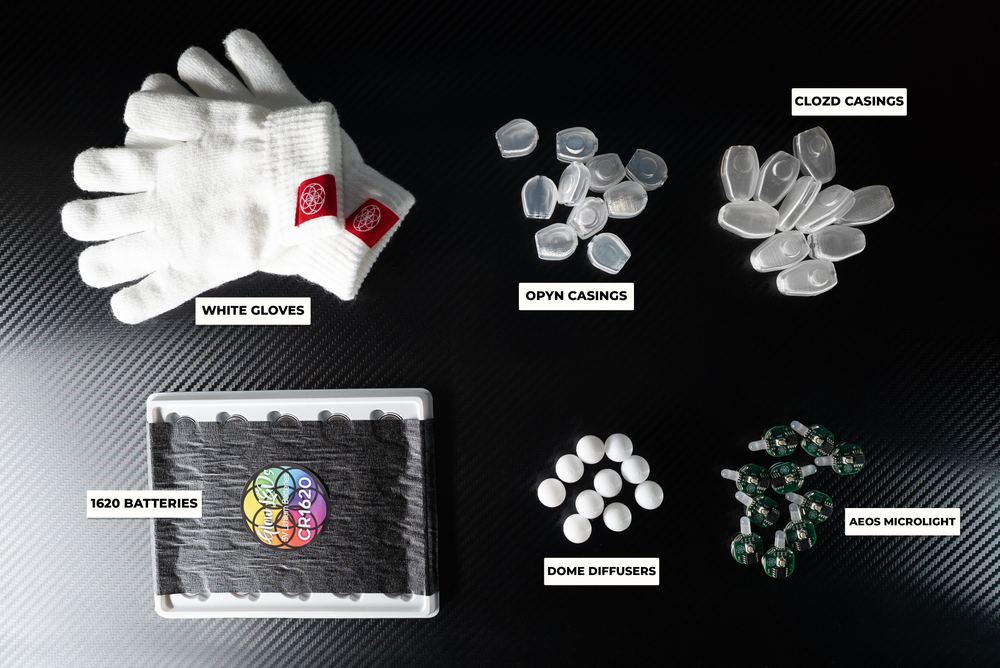
All you need to start is a pair of glove bases and a set of microlights. Glow LEDs beginner kits come with pre-programmed lights and comfortable glove bases so you can start practicing right away.
What move should I learn first?
The digit roll is the best first move. It builds finger independence, looks great under lights, and is the building block for dozens of more advanced light-show elements.
How long does it take to learn gloving basics?
Most beginners can put together a short show-ready combo within two to four weeks of daily practice. The digit roll, wave, and finger tutting can each be learned in a single session.
How much does it cost to start gloving?
A solid beginner setup typically runs between 30 and 60 dollars for glove bases and a set of microlights. Glow LEDs offers budget-friendly starter kits so you can get started without a large upfront investment.
As you get more comfortable, you'll start to notice a few distinct styles:
Flow: smooth, continuous movement
Tech: precise, often geometric movement
Conjuring: creating the illusion of manipulating light itself
Impact: sudden, dramatic movement timed tightly to the music
Try all of them. Most glovers end up blending a few once they find what feels natural.
5. Practice regularly
Fifteen to thirty minutes a day beats a long session once a week. Regular reps are what actually build muscle memory.
And you don't need gloves, lights, or even music to practice. Idle time in line, on the couch, waiting for coffee, all of it adds up faster than you'd expect.
6. Develop musicality
Gloving lives and dies by how well it tracks the music. Practice to different genres and tempos, and try to let your hands follow the beat, the melody, and the mood of the song, not just the rhythm.
7. Get to know your lights
Learn your microlights inside and out, how to switch modes, cycle colors, and change patterns on the fly. Knowing your gear well enough to adjust it mid-show adds a layer most beginners skip.
8. Record yourself
Film your practice sessions. It's the fastest way to see your movement the way an audience does, and it makes weak spots obvious in a way that just doesn't happen in the moment.
9. Go to events and meet other glovers
Once you're comfortable with the basics, look for local meetups or EDM shows. Other glovers are one of the best sources of feedback, inspiration, and honestly, friendship, you'll find.
10. Keep learning
Gloving keeps moving. Stay open to new techniques, new accessories, and your own spin on things as you find it.
It's supposed to be fun
Don't stress about the pace. Everyone learns differently, and the whole point of gloving is the enjoyment of getting better and expressing yourself along the way.