What Is Gloving? Beginner's LED Light Show Guide | Glow LEDs
What is Gloving?
Level: Beginner
In-Depth Tutorial
Theory
Articles
No quick version available for this tutorial
Gloving is the art of LED light shows performed with microlight gloves. Artists use finger-mounted microlights to craft flowing visual patterns synchronized to music. Learn the gear you need to start and how to practice your first light-show moves.
Summary
Gloving turns your hands into the show — ten fingertip microlights tracing patterns to the music
The performance is called a lightshow: one glover, one viewer, up close
It grew out of rave culture and still lives there — EDM shows, raves, and festivals
Never had one? Just ask — glovers love sharing lightshows with newcomers
What is gloving?
A dance performed with the fingers
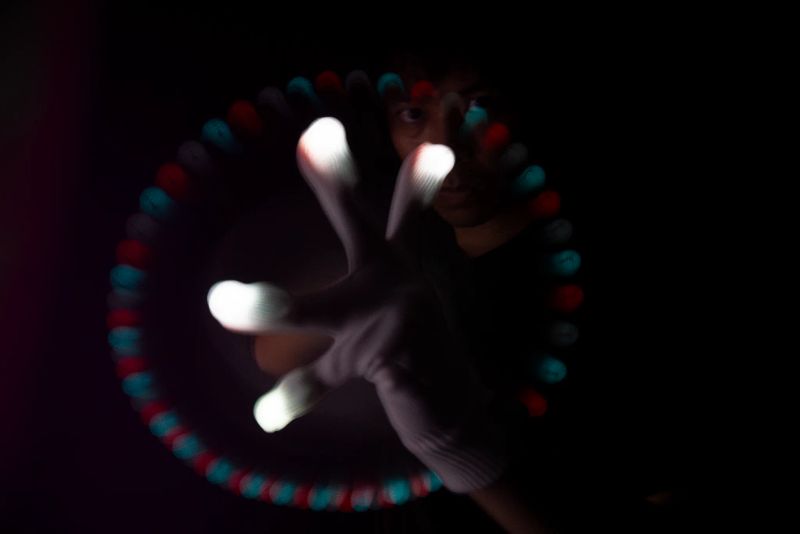
Gloves carry 10 microlights, one on each finger. Once the lights are on, the show flows: glovers use their fingers to put on a display tailored to the song, letting the music take them where it wants to go. We call this a . Done without gloves, the same thing is called a .
Frequently Asked Questions
What is gloving?
Gloving is performing LED light shows with microlight gloves. Artists use finger-mounted lights to create visual patterns and effects synchronized to music.
Is gloving hard to learn?
No, beginners can start with a few basic moves like the digit roll and the wave. Most people pick up their first show-ready combo within a few weeks of daily practice.
What gear do I need to start gloving?
A pair of gloves and a set of microlights are all you need to start. Glow LEDs offers beginner-friendly kits with pre-programmed lights and comfortable glove bases.
What style of music works best for gloving?
Most glovers perform to electronic music: EDM, house, and bass music are popular, but any genre with a clear beat works well for light-show choreography.
Can anyone learn gloving?
Yes, gloving has no age or fitness requirement. Anyone who can move their fingers can start learning basic light-show moves with a beginner microlight kit and a few minutes of daily practice.
lightshow
fingershow
The lights matter, but gloving isn't just waving illuminated hands around. It takes real skill and practice to make it look effortless.
A flow art
Flow arts is the broad category for any performance built around moving to music. You'll see plenty of others in the same spaces as gloving: hula hooping, poi, staff, orbiting, and more.
Personal, up close
The biggest difference between gloving and other flow arts is intimacy. Other flow toys need room to swing; the gloving "stage" is just a pair of hands, which means getting the full experience means getting up close. That closeness is a big part of what makes it work.
Rooted in rave culture
Gloving grew out of the EDM scene (raves) in its early days, and that's still where you'll most often find it.
Glovers
What is a glover, and what are they like?
Glovers are the people wearing the lit-up gloves, syncing their finger movements to the music. Sometimes a glover knows the track well enough to plan ahead. More often, especially at live events, they have no idea what's coming next, so they're flowing moment to moment. Getting into that flow state is euphoric. It's what keeps us coming back for more.
You'll find glovers at your local rave, EDM show, or festival, handing out lightshows, or lost in their own world enjoying the music. Most are friendly and happy to give a lightshow to anyone who asks.
The art of the lightshow
What is a lightshow?
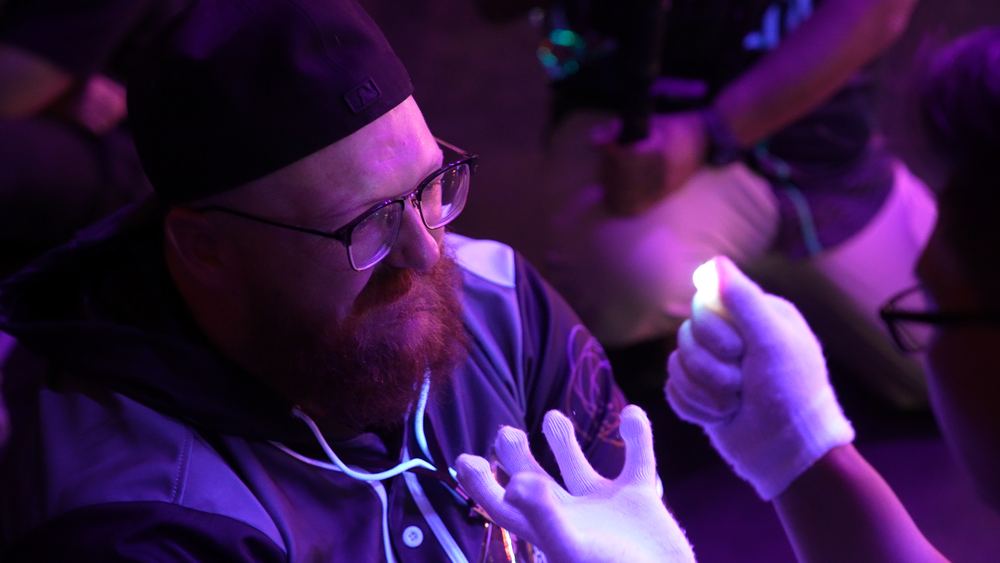
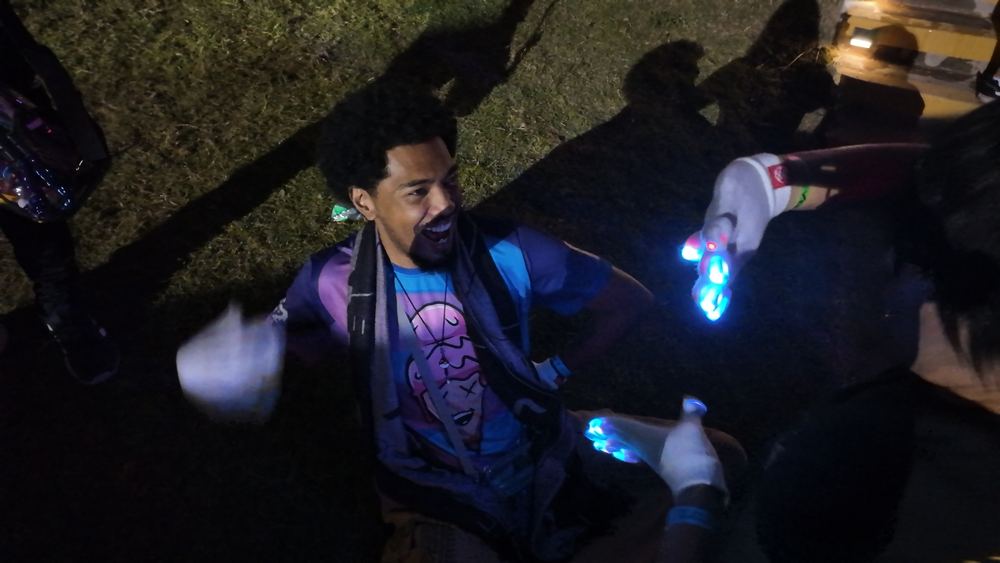
A lightshow is an experience shared between a glover and a viewer. It can be given to a small group, but it's typically one on one.
How does it work?
Usually you'll take a seat while the glover performs in front of you. Standing works too, if the setting's crowded or a seat isn't practical.
Once you're settled, the glover turns their lights on and gets moving. Every glover's style is different, so expect the unexpected: some get right up close to your face, others hang back for a whole-body show. Sit back, relax, and let it take you where it goes.
How do I get a lightshow?
It's always okay to ask. Glovers expect it and are usually glad to share. Just be respectful, and wait until they're done with their current show or conversation.
Trading lightshows
Once you're a glover yourself, you can trade shows with other glovers, taking turns performing for each other. It's a solid way to pick up new moves and styles, and get feedback if you want it.
The gloving community
More than solo practice
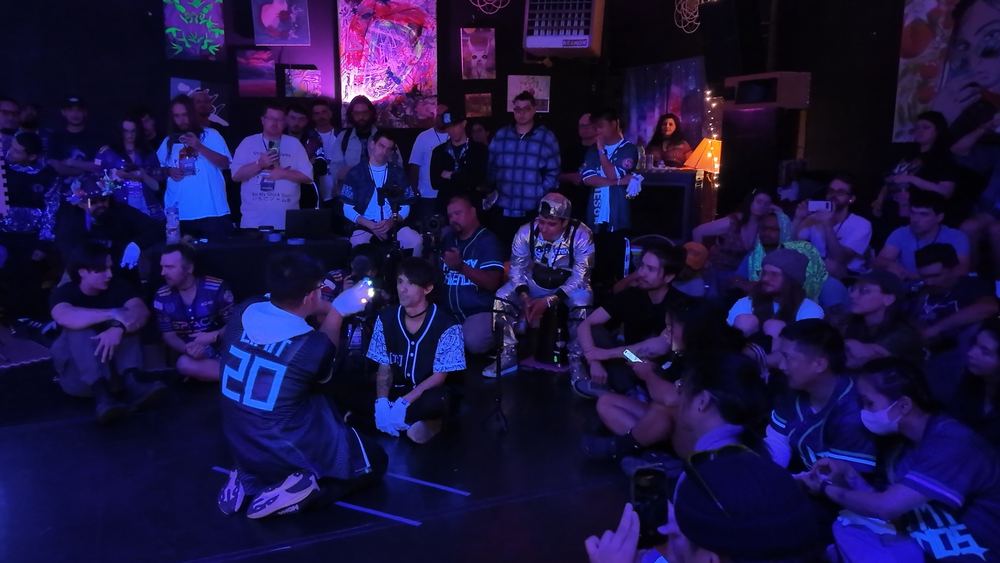
Gloving communities show up wherever glovers gather: trading techniques, running competitions, pushing each other to get better. That community is a big part of why the art form has grown the way it has.
Gloving meetups
At festivals and events, look for gloving meetups: glovers trading lightshows and getting to know each other. Lifelong friendships get made here. Keep an eye out at your next festival, or better yet, organize one yourself.